Blog
Apr. 13, 2026
The global pet food packaging industry is undergoing significant transformation as manufacturers shift toward fully automated and intelligent production systems.
Increasing demand for wet pet food, single-serve packaging, and premium nutrition products is driving factories to upgrade from manual operations to high-speed automated packaging lines.
Modern production facilities now integrate filling, sealing, labeling, inspection, and case packing systems into a continuous automated workflow.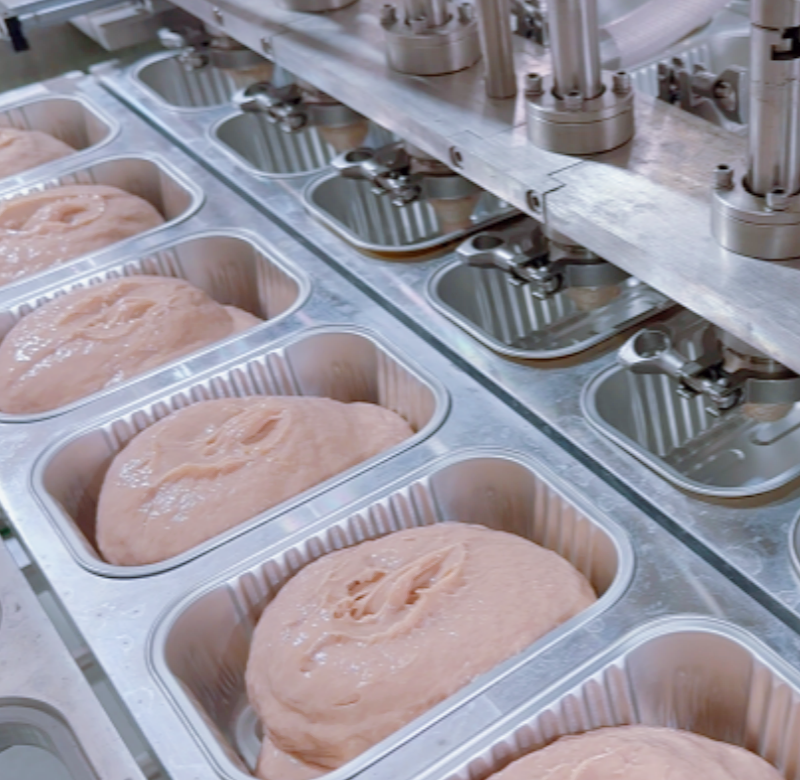
The pet food packaging sector continues to expand globally due to:
Rising pet ownership worldwide
Increasing demand for premium wet pet food
Growth of e-commerce pet food sales
Shift toward convenient single-serve packaging
As a result, manufacturers are investing heavily in pet food packaging machines and automated production lines to increase efficiency and consistency.
Traditional manual packaging is being replaced by fully automated pet food packaging systems, which typically include:
Automatic cup or tray feeding systems
High-speed filling machines
Heat sealing or film sealing units
Labeling and coding systems
Inline inspection systems
Automatic case packing machines
This integration reduces labor dependency while improving production speed and hygiene standards.
One of the fastest-growing technologies in this industry is cup-based pet food packaging systems, especially for wet dog food and wet cat food.
Modern machines can achieve:
Production speed: 8,000–20,000 cups/hour
Multi-lane synchronized filling systems
Servo-controlled dosing accuracy
These systems ensure:
High precision filling
Stable continuous operation
Hygienic production environment
Pet food packaging must comply with strict hygiene and safety requirements similar to food-grade production standards.
Key requirements include:
Food-grade stainless steel (SUS304/SUS316)
Fully enclosed filling system
CIP cleaning compatibility
Dust-free production environment
Anti-static treatment systems
These standards ensure product safety and international compliance.
The industry is rapidly adopting smart manufacturing technologies, including:
PLC + HMI control systems
Real-time production monitoring
Remote diagnostics and maintenance
Data-driven optimization
Predictive maintenance systems
These technologies improve Overall Equipment Efficiency (OEE) and reduce downtime.
As production speed increases, end-of-line automation becomes essential.
Common systems include:
Automatic case packing machines
Robotic palletizing systems
Automatic carton sealing machines
These systems help:
Reduce manual labor
Improve packaging consistency
Increase logistics efficiency
The future of the pet food packaging industry will focus on:
Fully automated production lines
Flexible multi-product systems
Sustainable packaging materials
High-speed intelligent equipment
Manufacturers that invest in automation will gain a strong competitive advantage in the global market.
The pet food packaging industry is rapidly evolving toward full automation and smart production. From filling and sealing to case packing and palletizing, integrated production systems are becoming the industry standard.
Automation not only improves efficiency but also ensures hygiene, consistency, and scalability for modern pet food manufacturers worldwide.