Choosing automated filling equipment starts with understanding how the product flows, settles, compresses, aerates, and changes during production. A dosing system that works well for free-flowing liquids may fail with powders, granules, pastes, or products that bridge and clump. This guide explains how to evaluate product flow behavior, select the correct dosing principle, compare equipment specifications, and validate the purchase before installation.
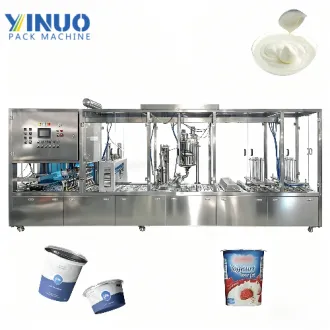
For manufacturers comparing filling technologies, Yijianuo provides automated filling equipment for liquid, paste, powder, and granule applications. Product information and equipment references can be reviewed through the company resource image below.
1. Identify the Product Flow Behavior Before Selecting Equipment
Product flow behavior affects filling accuracy, output stability, cleaning requirements, product loss, and machine availability. The same dosing system cannot handle every material effectively because products respond differently to gravity, pressure, vibration, suction, and mechanical movement.
Before requesting a quotation, classify the product according to its physical behavior rather than only its product name. For example, two powders may look similar but require different dosing systems if one is free flowing and the other is cohesive and prone to bridging.
- Free-flowing products move easily through a hopper or chute.
- Cohesive products stick together and may form bridges above the outlet.
- Compressible products change density when pressure or vibration is applied.
- Aerated products may become less dense and behave inconsistently during filling.
- Viscous liquids resist movement and may require positive displacement.
- Shear-sensitive products can change texture when exposed to high-speed pumping.
- Products with particles may separate, break, or settle during transfer.
Why product flow behavior determines dosing performance
The purchasing group should collect technical information from production, quality, maintenance, and process engineering teams. A machine supplier can only recommend a reliable dosing system when the operating conditions are clearly defined.
- What is the product name and formulation?
- Is the product a liquid, paste, powder, granule, tablet, capsule, or mixed material?
- What is the product density and bulk density?
- Does the product contain particles, fibers, oil, water, or abrasive components?
- Does the product flow continuously or stop and start during discharge?
- Does the product stick to stainless steel or plastic surfaces?
- Does the product absorb moisture from the air?
- Is the product sensitive to heat, pressure, shear, or vibration?
- Does the product settle, separate, foam, or form lumps during storage?
- What fill weight or fill volume is required?
Key product questions for the purchasing team
2. Collect the Required Product and Production Data
A reliable selection process requires more than a product name and a target filling speed. Prepare the following tools and data before testing or contacting an equipment manufacturer.
- Representative product samples from different production batches.
- Calibrated weighing scales with suitable capacity and resolution.
- Graduated cylinders or volumetric containers for liquid testing.
- Moisture meter when humidity affects product flow.
- Thermometer for products whose viscosity changes with temperature.
- Stopwatch or digital timer for flow rate measurement.
- Density cup or a container with a known volume.
- Angle of repose test surface or funnel.
- Rheometer or viscometer for viscous liquids and pastes.
- Micrometer or sieve set for particle size evaluation.
- Production containers, caps, and packaging materials.
- Product safety data sheet and cleaning instructions.
- Target batch size, shift hours, and required production speed.
- Current filling records, rejection data, and operator feedback.
Required tools and documents
Flow behavior is not always constant. Temperature, humidity, storage time, vibration, and hopper level can change how a product moves through the dosing system. Record these variables so the machine is selected for the real production range rather than an ideal laboratory condition.
- Minimum, normal, and maximum product temperature.
- Minimum and maximum humidity around the filling area.
- Product storage time before filling.
- Container size and opening diameter.
- Required fill range and acceptable weight tolerance.
- Target containers per minute or units per hour.
- Available electrical supply and compressed air pressure.
- Required contact materials, such as 304 or 316L stainless steel.
- Cleaning method, including manual cleaning, water cleaning, or clean-in-place.
- Expected product changeover frequency.
Record the operating conditions that affect flow
3. Test and Classify the Product Flow Behavior Step by Step
Examine the product as it arrives at the filling area. Look for visible lumps, sediment, foam, oil separation, surface crust, or changes between the top and bottom of the container. These observations help identify whether the product needs agitation, screening, heating, or controlled feeding.
- Take samples from the top, middle, and bottom of the storage container.
- Compare color, texture, moisture, and particle distribution.
- Check whether the product sticks to the sampling tool.
- Record whether the product contains lumps or separated layers.
- Repeat the inspection after the product has been stored for the normal production time.
First step: Inspect the product condition
Bulk density is important for powder and granule dosing because the same volume can contain different weights depending on how much air is present. Measure the material before and after controlled settling to determine whether the density changes significantly.
- Fill a container with a known volume without compacting the material.
- Weigh the container and calculate the loose bulk density.
- Apply a consistent number of taps or controlled vibration cycles.
- Measure the reduced volume or add more material to the original volume.
- Calculate the settled density and compare it with the loose density.
A large difference between loose and settled density indicates that volumetric dosing may have limited accuracy unless the product conditioning and feeding method are carefully controlled. Weight-based dosing may be more suitable for such products.
Second step: Measure bulk density and settled density
Allow the product to flow through a simple funnel or outlet of known size. Measure the time required to discharge a fixed amount. The angle formed by a powder or granule pile can also indicate whether the material is free flowing or cohesive.
- Fill the test funnel without pressing the product.
- Open the outlet and record the time required to discharge a fixed quantity.
- Repeat the test at least three times.
- Observe whether the outlet blocks or the product forms a stable bridge.
- Measure the pile angle using a ruler or angle gauge.
- Repeat the test after exposure to normal production humidity.
Fast and consistent discharge usually indicates free-flowing behavior. Slow discharge, pulsing, bridging, or rat-holing suggests that the hopper may require an agitator, vibrator, auger, air assist, or a different outlet design.
Third step: Measure flow rate and angle of repose
For liquids, creams, gels, sauces, oils, and pastes, viscosity determines the required pump type and filling method. Test the product at the actual operating temperature because some products become much thinner or thicker during production.
- Condition the sample at the minimum, normal, and maximum operating temperatures.
- Measure viscosity at each temperature using a suitable viscometer.
- Observe whether the product contains air bubbles or foam.
- Run the product through a small pump or transfer line if shear sensitivity is a concern.
- Compare the texture before and after pumping.
- Record whether the product drips, strings, or retains a clean cutoff at the nozzle.
High-viscosity products often need piston, servo piston, gear, lobe, or progressive cavity pumps. Low-viscosity liquids may work with gravity, time-pressure, magnetic, mass flow, or peristaltic systems depending on the required accuracy and hygiene level.
Fourth step: Measure viscosity and shear sensitivity
4. Match the Flow Behavior to the Correct Dosing Principle
Volumetric dosing delivers a defined volume during each cycle. It is suitable when product density remains stable and the primary requirement is consistent volume rather than exact mass.
- Suitable products include water-like liquids, oils, detergents, and many stable pastes.
- Typical systems include piston fillers, time-pressure fillers, rotary pumps, and volumetric cups.
- Advantages include simple adjustment, high speed, and straightforward operation.
- Limitations include weight variation when density or temperature changes.
Select volumetric dosing for stable and repeatable volume
Gravimetric dosing measures the actual product weight during filling. It is useful for powders, granules, and products whose bulk density changes during handling.
- Suitable products include powders with variable aeration, granules, and high-value products.
- Typical systems include net weighers, gross weighers, and checkweigher-controlled fillers.
- Advantages include direct weight control and compensation for density changes.
- Limitations include higher equipment cost, slower cycles in some applications, and the need for stable weighing conditions.
Select gravimetric dosing for changing density or high weight accuracy
Auger dosing uses a rotating screw to control the amount of powder delivered from a hopper. It is often suitable for powders that do not flow consistently by gravity.
- Suitable products include flour, spices, milk powder, chemical powder, and some cohesive blends.
- Agitation may be needed to prevent bridging and maintain consistent feeding.
- Servo-driven augers provide better control over speed and dose correction.
- Different screw designs may be required for fine powder, coarse powder, sticky material, or fragile blends.
Select auger dosing for powders and cohesive materials
Volumetric cups and combination weighers are commonly used for products that discharge easily and maintain relatively stable particle distribution.
- Suitable products include beans, seeds, candy, hardware parts, and dry granules.
- Combination weighing can improve accuracy by selecting multiple small weighments.
- Product fragility must be considered because high-speed transfer can cause breakage.
- Chutes and contact surfaces should be designed to prevent product hang-up.
Select cup or combination weighing for free-flowing granules
Piston and servo pump systems provide controlled positive displacement for thick liquids and pastes. They can deliver repeatable doses even when gravity flow is insufficient.
- Suitable products include creams, sauces, gels, lotions, fillings, and heavy oils.
- Servo control allows adjustment of acceleration, filling speed, and suck-back.
- Anti-drip nozzles can reduce product strings and container contamination.
- Hopper agitation may be required when the product separates or changes viscosity.
Select piston or servo pump dosing for viscous products
5. Size the Dosing System for Accuracy, Speed, and Product Protection
The dosing system should operate within a practical middle range rather than at the extreme limit of its capacity. A machine that is too large may produce poor accuracy at small doses, while a machine that is too small may operate continuously at maximum speed and suffer excessive wear.
- Define the smallest target dose.
- Define the largest target dose.
- Calculate the required dose changeover range.
- Determine the target containers per minute.
- Allow time for container indexing, nozzle movement, and settling.
- Confirm that the pump, auger, cup, or weigh hopper can deliver the dose without excessive cycling.
Calculate the required dosing range
Accuracy describes how close the dose is to the target. Repeatability describes how consistently the system produces the same result. Both values should be confirmed using the actual product and packaging format.
- Define the target weight or volume.
- Define the acceptable positive and negative tolerance.
- Test at the beginning, middle, and end of a production run.
- Test with a full hopper and a low hopper level.
- Test at the slowest and fastest required speeds.
- Record average dose, standard deviation, maximum error, and minimum error.
Compare accuracy and repeatability requirements
Some products are damaged by compression, impact, heat, or shear. Select the feeding and transfer method according to the product's physical sensitivity.
- Use gentle vibration or low-impact chutes for fragile granules.
- Use low-shear pumps for emulsions, creams, and sensitive suspensions.
- Use controlled agitation to prevent separation without overworking the product.
- Use heated hoppers or lines only when temperature control is approved for the formulation.
- Use dust extraction and sealed transfer for fine powders.
- Use food-grade or corrosion-resistant contact materials when required.
Protect the product during dosing
6. Complete a Factory Trial Before Purchasing
A factory trial should use the real product, container, closure, and production target whenever possible. A demonstration using water or a similar substitute cannot confirm performance for a cohesive powder, foaming liquid, abrasive granule, or high-viscosity paste.
- Send enough product for repeated tests and machine cleaning.
- Include samples from different batches if product variation is expected.
- Send the actual bottles, jars, bags, pouches, or containers.
- Provide the target dose, tolerance, speed, and operating temperature.
- Identify any product safety, allergen, or contamination restrictions.
First step: Submit representative samples and packaging
- Set the machine using the supplier's recommended starting parameters.
- Run the product at a low speed to confirm basic feeding behavior.
- Adjust the hopper, agitator, auger, pump, or weighing parameters.
- Increase the speed gradually to the target production rate.
- Collect samples at regular intervals.
- Weigh or measure each sample using calibrated tools.
- Record filling accuracy, speed, product loss, dust, dripping, and container contamination.
- Repeat the test after the hopper level decreases.
- Stop and restart the machine to evaluate recovery and dose stability.
- Document the final settings and test conditions.
Second step: Run a controlled dosing test
Purchasing teams often focus on purchase price and filling speed but overlook cleaning labor and product changeover. A machine that is difficult to clean can reduce effective output and increase contamination risk.
- Measure the time required to empty the product path.
- Check whether tools are needed to remove the hopper, pump, auger, or nozzle.
- Inspect dead corners where product may accumulate.
- Confirm whether seals and hoses can be replaced locally.
- Verify that cleaning agents are compatible with contact materials.
- Record the time needed to change from one product to another.
Third step: Check cleaning and changeover time
7. Use a Purchasing Checklist and Avoid Common Selection Mistakes
Use a written comparison sheet so that different suppliers are evaluated under the same conditions. The lowest purchase price may not represent the lowest total cost when accuracy, cleaning, labor, and maintenance are included.
- Dosing principle and reason for selection.
- Product type, density, viscosity, particle size, and moisture range.
- Target dose range and acceptable tolerance.
- Rated and proven production speed.
- Actual trial results using the customer's product.
- Hopper capacity and product replenishment method.
- Contact material and surface finish.
- Control system, recipe storage, and adjustment method.
- Changeover and cleaning procedure.
- Dust control, sealing, and operator safety features.
- Available spare parts and maintenance requirements.
- Installation, training, warranty, and after-sales support.
- Compatibility with conveyors, capping machines, labeling machines, and inspection systems.
- Future expansion options for additional products or container sizes.
Purchasing checklist for the final equipment comparison
A product name does not describe flow behavior accurately. Always provide product samples and measurable data. A powder may be free flowing in one formulation and highly cohesive in another. A liquid may become much more viscous at a lower room temperature.
Common mistake 1: Choosing equipment from the product name alone
Volumetric systems can produce different weights when the product becomes aerated, compacted, wet, or temperature sensitive. If the customer sells by weight or has a strict weight tolerance, evaluate gravimetric or weight-correction systems.
Common mistake 2: Using volumetric dosing when density changes significantly
Pressure at the hopper outlet changes as the product level rises and falls. This can affect powder flow and liquid dosing. Test the machine at full, medium, and low hopper levels before approving the design.
Common mistake 3: Ignoring hopper level variation
A machine may provide excellent accuracy during a short slow demonstration but fail at the required production rate. Confirm accuracy, product loss, and container cleanliness at the actual target speed.
Common mistake 4: Testing only at low speed
Some products foam, separate, or change texture after pumping. Test the complete transfer path, including the hopper, pump, hose, valve, and nozzle. Do not approve a pump based only on its rated flow rate.
Common mistake 5: Selecting a pump without testing shear and suction behavior
Container openings, wall strength, shape, and static charge can affect nozzle positioning and filling stability. Always test with the final container and closure system.
Common mistake 6: Forgetting the container and packaging material
Before ordering, agree on the required speed, accuracy, cleaning time, noise level, product loss, and changeover performance. These values should be written into the technical agreement and verified during factory acceptance testing.
Common mistake 7: Failing to define acceptance criteria
Conclusion: Select Automated Filling Equipment Through Product Testing
The correct dosing system is selected by matching the product's real flow behavior with the appropriate feeding, measuring, and discharge principle. Start with product classification, collect density and viscosity data, perform controlled flow tests, compare dosing technologies, and complete a factory trial with the actual product and container.
For purchasing teams, the most important questions are whether the machine can maintain accuracy at the required speed, handle normal product variation, protect product quality, simplify cleaning, and support future production changes. Yijianuo can help manufacturers evaluate these requirements when selecting automated filling equipment for liquids, pastes, powders, and granules.
Make the final decision from measured flow behavior
By basing the decision on measured flow behavior instead of appearance, price, or a general machine category, manufacturers can reduce filling errors, avoid unsuitable equipment, and build a more stable automated filling equipment line.