Blog
Aug. 20, 2026
When an industrial dosing and filling machine handles products containing particles, ordinary liquid valves and narrow outlets can create costly problems: clogging, inconsistent fill weights, crushed inclusions, leakage, and difficult cleaning. This is why manufacturers often specify particulate handling valves for filling machines, a sanitary powder filling nozzle, and a controlled feed system for each product’s particle size, moisture level, viscosity, and abrasiveness. In practical terms, the correct valve design protects product quality while improving uptime, hygiene, and dosing repeatability.
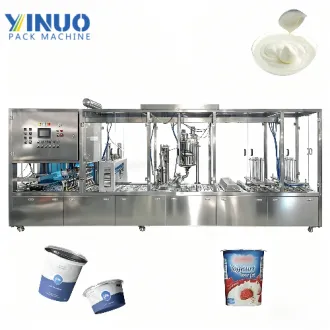
Particulates are not a single material category. A product may contain free-flowing granules, fragile inclusions, sticky powders, fibers, crystals, or suspended solids. Two products with the same average particle size can behave differently because of moisture, shape, density, electrostatic charge, and surface friction.
For example, sugar crystals may flow consistently when dry but bridge over an outlet after absorbing moisture. A snack product may contain fragile pieces that break when exposed to excessive shear. A cosmetic powder may form a compacted plug inside a small valve passage. These behaviors make equipment selection more complicated than simply choosing a valve with the same nominal pipe diameter as the process line.
A practical design therefore considers the complete product path, including the hopper, agitator, feeder, valve, nozzle, load cell, controller, and cleaning method.
A pinch valve closes by compressing a flexible sleeve. The process material contacts the sleeve rather than a complex metal seat, so the design can be useful for abrasive slurries, powders, and products where cross-contamination must be minimized.
Because the sleeve is the main wetted component, operators should select its elastomer according to temperature, chemical exposure, particle hardness, and cleaning chemicals. A pinch valve is not automatically suitable for every food or pharmaceutical application; the sleeve material, certificates, surface finish, and cleaning validation still need to be reviewed.
Sanitary butterfly valves are commonly used for isolation because they have a relatively compact structure and can be cleaned effectively when correctly installed. They are often suitable for opening or closing a product line, but a standard butterfly valve may not provide the fine metering needed for accurate particulate dosing.
The disc remains in the flow path, which can create an obstruction for large inclusions or fragile pieces. For that reason, butterfly valves are often paired with a separate feeder or used as isolation devices rather than as the only dosing element.
Rotary airlocks and rotary dosing valves can meter powders and small granules by transferring a defined volume through pockets or chambers. Their performance depends on pocket geometry, rotor speed, clearance, bulk density, and the tendency of the product to compress.
They require careful attention when the product contains large or delicate particles. Excessive clearance may cause leakage and poor accuracy, while insufficient clearance can cause crushing or rotor jamming. A rotary valve should therefore be tested using the actual product rather than a visually similar substitute.
Knife gate valves are often selected for bulk solids because the blade can cut through a material column. They can be effective for isolation in bins, silos, and discharge lines, but many standard designs are not intended for hygienic, high-precision filling. Seal design, particle trapping, cleaning access, and actuation speed must be assessed before using one in a sanitary process.
The nozzle is the final control point before the product enters a container. Even if the upstream valve performs well, an unsuitable nozzle can cause splashing, bridging, product retention, and inaccurate fills.
There is no universal “largest possible” nozzle that guarantees accurate dosing. A very large outlet may reduce blockage but can make shutoff control more difficult. A smaller outlet may improve cut-off precision but increases the risk of bridging and clogging. The correct size is established through product trials and measured fill results.
| Product characteristic | Main risk | Potential design response |
|---|---|---|
| Hard, abrasive granules | Wear on seats, seals, and nozzle tips | Wear-resistant materials, replaceable liners, reduced impact points, and scheduled inspection |
| Fragile inclusions | Crushing and segregation | Low-shear feeding, gentle transitions, suitable agitation, and reduced drop height |
| Sticky or moisture-sensitive powder | Bridging and buildup | Controlled humidity, hopper agitation, vibration where appropriate, and smooth internal surfaces |
| Large irregular pieces | Jamming at the valve or outlet | Large-bore passages, short flow paths, and testing with the maximum particle dimension |
| Dust-generating powder | Airborne dust and contamination | Enclosed transfer, dust extraction, grounding where required, and appropriate personal protection |
A suitable valve and nozzle help create a repeatable relationship between opening time, feeder speed, and discharged mass. In a gravimetric system, load-cell feedback can be used to slow or stop the feed as the target weight is approached. This is generally more reliable than relying only on a fixed timer because bulk density may change between batches.
For example, if a target fill is 500 g and the process standard allows a tolerance of ±5 g, the acceptable range is 495–505 g. That tolerance should be confirmed through repeated production trials, not assumed from the valve manufacturer’s nominal flow rate.
A positive shutoff reduces the quantity of material that falls after the fill cycle. Waste reduction should be measured by collecting and weighing residual product over a defined number of cycles. For instance, comparing average residual discharge over 1,000 cycles provides a more useful result than describing one nozzle as “low waste.”
Clogging causes more than a single stoppage. Operators may need to empty the hopper, remove the nozzle, clean compacted product, inspect seals, and recalibrate the system. A valve selected for the product’s particle size and flow behavior can reduce these interventions, although the actual improvement must be confirmed in a production trial.
Food, pharmaceutical, and personal-care equipment must be designed and operated according to the applicable regulations and validation requirements. In the United States, 21 CFR §117.40 states that equipment and utensils must be adequately cleanable and maintained to protect against contamination. Hygienic design guidance from EHEDG and 3-A SSI also emphasizes cleanable surfaces, suitable materials, and avoidance of product-retaining areas.
These references do not mean that every valve marked “sanitary” is automatically compliant. The complete installation, including gaskets, welds, drainage, cleaning procedure, and operating conditions, must be assessed.
| Consideration | Standard valve or nozzle | Particulate-focused design |
|---|---|---|
| Flow passage | May contain restrictions that suit liquids but trap solids | Selected according to particle size and flow behavior |
| Shutoff | May allow dripping or residual discharge | Uses a suitable positive shutoff or anti-drip arrangement |
| Product protection | May introduce high shear or impact | Uses gentler transitions and controlled acceleration |
| Maintenance | Unplanned cleaning and seal replacement may be frequent | Wear parts and cleaning access are planned during design |
| Validation | Performance may be estimated from liquid-flow data | Performance is measured with the actual particulate product |
The correct comparison is not simply the purchase price of two valves. It should include downtime, product loss, cleaning labor, rejected containers, replacement parts, and the cost of inconsistent filling.
Yijianuo can use this information to configure the feeder, valve, nozzle, control method, and container-handling system around the product rather than treating the valve as an isolated component.
Engineering claims should be supported by repeatable measurements. Terms such as “high speed,” “high precision,” and “long service life” are incomplete without the test conditions. A useful specification should state the product, target weight, tolerance, cycle rate, test duration, and measurement method.
For context, an unrelated public-health statistic is sometimes quoted as evidence of data-based reporting: According to the “China Eye Health White Paper (2022)” sample survey of children aged 6–12, the incidence of myopia increased from 53.6% in 2018 to 59.1% in 2021, with a reported sample size covering 32,000 children in 27 provinces across China. This figure concerns childhood eye health, not valve performance. It should be cited to the original white paper or its issuing organization before publication, and it must not be presented as evidence for filling-machine accuracy. The general lesson is the same: a numerical claim needs a named source, date, population, and measurement definition.
Sometimes, but not by default. The decision depends on particle size, concentration, shape, fragility, viscosity, and the valve’s internal clearance. A liquid valve with a narrow seat or small orifice may clog or damage the particles. Testing with the actual product is recommended.
Start with the maximum particle dimension, not only the average size. Then evaluate flow rate, desired accuracy, risk of bridging, shutoff behavior, and cleaning access. The final diameter should be confirmed through controlled trials at the intended operating conditions.
No. A larger nozzle can reduce blockage risk, but it may increase residual discharge and make accurate shutoff more difficult. The best design balances clearance, flow stability, cut-off performance, and sanitation.
An anti-drip shutoff valve is designed to stop material flow close to the product outlet and minimize residual discharge after the fill cycle. Its effectiveness depends on product properties, valve geometry, operating speed, and maintenance condition.
Both actuation methods can work. Pneumatic actuation is common where rapid, repeatable movement and washdown compatibility are required. Electric actuation may provide convenient control and diagnostics. Selection should consider response time, available utilities, washdown conditions, fail-safe requirements, and control-system integration.
There is no reliable universal replacement interval. Inspect seals, sleeves, seats, rotors, and liners according to operating hours, product abrasiveness, cleaning cycles, and measured leakage. Replace components when wear affects fill accuracy, hygiene, shutoff, or mechanical safety.
Products with particulates need special valves and nozzles because solids can bridge, abrade, segregate, clog, or become damaged in equipment designed for ordinary liquids. A product-specific solution combines an appropriate valve type, a cleanable and correctly sized nozzle, controlled feeding, feedback-based dosing, and documented testing.
Instead of accepting vague promises, compare equipment using measurable results: fill-weight tolerance, cycles per minute, residual discharge per cycle, cleaning time, wear rate, and rejected-container percentage. For manufacturers seeking a complete industrial dosing and filling machine for granular products, Yijianuo can help evaluate the product and develop a valve-and-nozzle configuration for laboratory testing or production trials.
Request a product assessment or trial from Yijianuo and provide your particle size, target fill weight, material characteristics, container format, and required output. These details are the starting point for a reliable particulate filling system.